Monday, July 30, 2012

Oscar Wilde's Hair


We may quite rightly bemoan today's celebrity culture and the complicity and laziness of the media in regurgitating one another's stale tidbits of gossip, but one should note that on January 7, 1886 the New York Times thought that the following was important enough to reprint from London's Figaro newspaper:

Mr. Oscar Wilde, much to the chagrin of his more thoroughgoing followers, still persists in wearing his hair cut short. Both in look and costume indeed he is so altered for the better that the name - prematurely given him by a satiric journal- of Oscar Tame would now fit him like a glove.

One should note that Wilde, in great dandy style, was original and always ready to confound his critics by doing the unexpected - when his long hair became a cliche, he simply cut it off so that he couldn't be so easily caricatured as the languid, supra-bohemian aesthete. 

Wednesday, July 4, 2012

The Chap: Seersucker Social

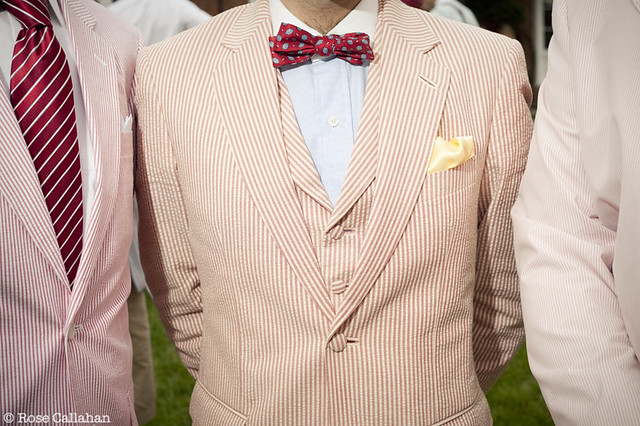
The following is an excerpt from an article I wrote for The Chap magazine about Washington D.C.'s Dandies and Quaintrelles 2011 Seersucker Social. The beautiful photographs are provided by Rose Callahan of The Dandy Portraits:


...For the Capitol city of a superpower nation, Washington DC is sadly insular, non-cosmopolitan, and aesthetically conservative. The suits are gray or navy, the ties are red or blue, and not since the pith-helmeted and moustachioed Teddy Roosevelt has a president looked like anything other than a businessman. The summer heat can be stifling, adding to the soporific atmosphere of the city.
            It was with the admirable aim of introducing his notoriously staid home city to a form of more “refined leisure” that Eric Brewer founded Dandies & Quaintrelles. The group is dedicated to organizing events which embody an egalitarian elegance worthy of the Bill of Rights...
...Seersucker is by no means a new addition to the pantheon of summer fabrics. The word arrived in the English Language from the Hindi sirsakar, which in turn got it from the Persian shiroshakar, by way of Tamerlane's 14th-century invasion. The original means “milk and sugar,” a reference to the alternating textures of the puckered stripes of cotton. The fabric is most commonly found in white with another color in eighth-inch vertical Bengal stripes. It is less frequently found in gingham checks, and I once nearly fainted in admiring awe at a white-on-white striped seersucker dinner jacket with a built-up linen shawl collar and turn-back cuffs. Because the fabric is so light and crisp (holding a crease much better than plain linen,) it's perfect for summer suits, usually half-lined......At the very start of the twentieth century, seersucker began its journey to become one of this country's best-loved fabrics. Although the British wore seersucker in the empire's equatorial colonies, its popularity boomed in the heat of the American South. It soon became a staple of the Southern Gentleman's wardrobe, and the traditional uniform for going to the Kentucky Derby, getting tanked on Mint Juleps, and losing your son's college fund on a long-shot. The fabric later gained in popularity when those sly young Ivy-Leaguers appropriated the garments as separate pieces rather than full suits. 
Even the hallowed halls of the Senate occasionally see seersucker. Once a year, both lady and gentleman Senators celebrate Seersucker Thursday, a tradition started by Republican Senator Trent Lott. The event harks back to a time before air-conditioning, when the heat was so punishing that sweat-covered legislators, probably driven mad, did things like enact prohibition....


Tuesday, June 19, 2012

Players Cigarettes Dandy Cards

Below are a few pictures of the "Dandies" trading cards which Players Cigarettes printed in 1932. I bought a full set of these on ebay - they're not particularly rare or valuable in monetary terms, but it does say something about the dandy's persistent appeal that a company which usually made cards featuring sports figures for men with a twenty-a-day habit actually made this series.


Friday, June 8, 2012

The Chap: Jack Johnson


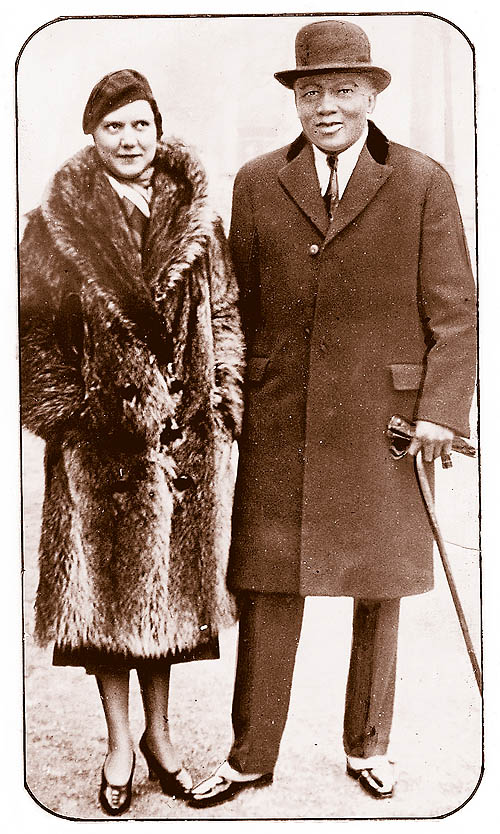
The following is an excerpt from my article on world heavyweight dandy Jack Johnson for the Chap Magazine:


...Jack Johnson was now the first black World Heavyweight Champion. He had everything but modesty: he wore patterned bow ties with a wing collar, bespoke suits in large windowpane checks, coats with wide fur lapels, a diamond stick pin, pearl shirt studs, and rings the size of plums. He carried an ivory-handled cane and always wore a jaunty hat, be it pork pie, boater, or trilby. His white girlfriends would be dressed to match in sable and mink. He drove sports cars at top speed, once causing a white police officer to fine him fifty dollars. Johnson peeled a hundred from a wad, and gave it to the officer, who stammered that he didn’t have change. Johnson told him not to worry about the change, because he’d be speeding on his way back, too.
People clamored for the former undefeated Heavyweight Champion Jim Jeffries to come out of retirement and wipe the smile off Johnson’s face, and finally public opinion and the promise of a fortune brought Jeffries off of his Alfalfa farm and back into the ring. Johnson wiped the mat with him on July 4th, 1910, and the next day race riots erupted across America.White America finally had its revenge when Johnson was arrested on Federal “white slave” trafficking charges for taking a white prostitute across state lines.... 

Tuesday, May 8, 2012

The Campaign for Wool's Savile Row Field Day

While I was doing research in London in 2010 I was kindly invited by the people at Fox Brothers Flannel and the Savile Row Bespoke Association to attend the Savile Row field day to promote British Wool. The Row was filled with sheep, and I was invited to a VIP lunch with, among others, legendary tailor Edward Sexton. The event coincided nicely with the publication of James Sherwood's excellent book "Bespoke: The Men's Style of Savile Row." Here are a few pictures from the day: